
B2B Wholesale Ecommerce: How to Make Repeat Construction Supply Ordering Faster, Cleaner and Easier
Synopsis
Repeat orders are where wholesale ordering hurts most. This guide walks the nine things a wholesale ecommerce platform needs — trade logins, personal pricing, reordering from history, stock visibility, mobile and rep apps, ERP links — and how they work together in practice.
Table of Contents
- 1.Introduction
- 2.What is B2B wholesale ecommerce?
- 3.Why wholesale businesses are moving away from phone and email orders
- 4.The biggest pain point: repeat orders
- 5.What a good wholesale ecommerce platform should include
- 6.1. Trade customer login
- 7.2. Personal pricing and discounts
- 8.3. Order history reordering
- 9.4. Digital catalogue
- 10.5. Stock visibility
- 11.6. Customer self-service portal
- 12.7. Mobile ordering app
- 13.8. Sales rep app
- 14.9. ERP, EPoS and stock links
- 15.How B2B wholesale ecommerce works in practice
- 16.Common mistakes to avoid
- 17.Where JustSell fits
- 18.FAQ Section
- 19.Final thoughts
Introduction
A trade customer knows what they buy. They often buy the same materials, food, parts, tools, drinks, stock lines or consumables every week. They do not want to dig through old emails, phone the office, wait for a callback, or send a photo of a handwritten list.
And your team probably does not want that either.
Yet many wholesalers, distributors, trade merchants and building material suppliers still run a big part of their order process through phone calls, WhatsApp messages, emails, spreadsheets and manual entry into back-office systems.
That works when the order volume is small. It starts to break when the business grows.
Orders get missed. Product codes are typed wrong. Prices are checked twice. Customer service staff spend hours answering the same questions. Sales reps chase updates instead of selling. Customers reorder late because placing the order feels like a job in itself.
That is where B2B wholesale ecommerce comes in.
A good wholesale ecommerce platform does more than put products online. It gives trade customers a self-service ordering portal where they can see their own prices, reorder from past orders, check order history, download invoices, track deliveries and place repeat orders without needing to speak to someone every time.
For the right business, it can mean faster repeat orders, fewer order mistakes and far less admin.
What is B2B wholesale ecommerce?
B2B wholesale ecommerce is online ordering between businesses.
Instead of selling one product at a time to the public, a wholesale ecommerce platform is built for trade customers who buy regularly, in larger quantities, often with agreed pricing, account terms, delivery rules and repeat order patterns.
A normal retail ecommerce website is usually built around simple pricing, card payment and individual shoppers.
A B2B ecommerce platform needs to handle more complex buying. For example:
- A builder’s merchant may show different prices to different trade accounts.
- A food and drink wholesaler may need customers to reorder from previous baskets every week.
- A distributor may need minimum order values, delivery days and route planning.
- A warehouse-based supplier may need live stock numbers so customers do not order items that are unavailable.
- A sales rep may need to create quotes, check customer history and convert quotes into orders while visiting customers.
That is why B2B wholesale ecommerce is not just a website. It is a wholesale ordering system, customer portal, digital catalogue, repeat order tool and order management process working together.
Why wholesale businesses are moving away from phone and email orders
Phone and email orders feel personal. That is why many trade suppliers keep using them for years.
But there is a hidden cost.
Every manual order has to be read, checked, typed, confirmed, priced, corrected, picked, packed and invoiced. The more manual steps involved, the more chances there are for mistakes.
- A customer says “same as last week” but last week’s order had substitutions.
- An email says “five boxes” but does not say which size.
- A handwritten note uses an old product code.
- A sales rep agrees a price, but the office does not have it recorded.
- A customer phones at 4.55pm and expects next-day delivery.
- None of these problems are unusual. They happen in real wholesale businesses every day.
A B2B customer ordering portal helps because it gives both sides one clear version of the order. The customer picks from your catalogue, sees their own pricing, uses their order history, confirms the basket and receives confirmation.
Your team still controls the business. You are not handing customers a generic online shop and hoping for the best. You are giving them a better way to buy from you.
The biggest pain point: repeat orders
- Repeat orders are the heart of wholesale.
- Many trade customers do not want to “shop”. They want to reorder.
- This is especially true for building materials, food wholesale, cleaning supplies, convenience goods, spare parts, packaging, maintenance supplies and trade consumables.
- A cafe may order the same drinks and dry goods every Monday.
- A builder may reorder plasterboard, fixings and adhesives for similar jobs.
- A retailer may top up the same fast-moving stock lines every week.
- A contractor may buy the same consumables month after month.
- The problem is that many ecommerce systems are still designed as if every buyer is browsing for the first time.
That is not how trade ordering works.
A strong B2B reordering system should let customers:
- View previous orders
- Reorder from past orders
- Save favourite products
- Build regular order lists
- See their own agreed prices
- Check stock and delivery information
- Place orders quickly from mobile
- Avoid retyping the same order every week
This is where repeat order software becomes valuable. It saves the customer time and reduces manual order entry for your team.
When customers can place quick repeat orders themselves, they are less likely to delay, forget, order from a competitor, or send a vague message that needs chasing.
What a good wholesale ecommerce platform should include
A wholesale ecommerce platform should match how your customers actually buy.
For most suppliers, that means more than a public product catalogue. It means account-based ordering.
Here are the core features to look for.
1. Trade customer login
Your trade customers should have their own secure login.
Once logged in, they should be able to see the products, prices, documents and ordering options relevant to them.
This matters because B2B pricing is rarely one-size-fits-all. You may have pricing by customer, customer group, location, quantity, contract, discount band or product type.
A proper trade ordering portal should support that.
2. Personal pricing and discounts
Personal pricing is one of the main differences between retail ecommerce and B2B ecommerce.
Your platform should allow different customers to see different prices without needing your team to manually check everything.
For example, a long-standing trade customer may get agreed prices on certain product lines. A distributor may have volume-based pricing. A builder may have a discount level based on spend.
If those rules are not built into the ordering system, your staff end up checking prices manually. That slows everything down and creates mistakes.
3. Order history reordering
Order history reordering is one of the simplest ways to make customers happy.
Instead of searching your whole catalogue, customers can open a past order, adjust quantities and place the order again.
This is useful for any business where customers order the same products regularly.
It also reduces errors because customers are not guessing product names, codes or pack sizes from memory.
4. Digital catalogue
A digital catalogue should be easy to search, filter and update.
That means clear product names, images, categories, pack sizes, units, specifications and availability.
For building materials ecommerce, product data matters. A buyer may need dimensions, weight, brand, compatibility, delivery restrictions or technical details before ordering.
For food and drink wholesale, buyers may need pack sizes, allergen information, case quantities and cut-off times.
A poor catalogue creates phone calls. A clear catalogue reduces them.
5. Stock visibility
Customers do not need to see every warehouse detail, but they do need confidence.
If stock information is missing or wrong, customers may place orders that cannot be fulfilled. That leads to substitutions, refunds, delays and awkward conversations.
A connected wholesale order management system should help your team manage stock across the webshop, warehouse, EPoS, sales reps and other sales channels.
6. Customer self-service portal
A B2B customer ordering portal should reduce the number of “can you just send me…” calls.
Customers should be able to access useful information themselves, such as:
- Order history
- Invoices
- Statements
- Credit notes
- Delivery updates
- Account documents
- Saved addresses
- Payment options
This does not replace your customer service team. It frees them from repetitive admin so they can deal with the issues that actually need a person.
7. Mobile ordering app
Many trade customers are not sitting at a desk.
They are on site, in a van, at a store, in a warehouse, walking around a stock room, or speaking to their own customers.
That is why a B2B ordering app can be more useful than a desktop-only portal.
A mobile app makes it easier to place orders at the moment the need appears. It also gives you a direct route back to the customer through reminders, updates and push notifications.
For repeat ordering, mobile matters.
8. Sales rep app
Online ordering does not mean removing sales reps.
In many wholesale businesses, the best result comes from giving sales reps better tools.
A sales rep app can help reps view customer history, create quotes, check stock, apply the right pricing, capture leads and turn quotes into orders without waiting until they are back at the office.
That means your sales team can spend more time selling and less time passing notes back to admin.
9. ERP, EPoS and stock links
One of the biggest mistakes in wholesale ecommerce is launching an online store that is not properly connected to the rest of the business.
If orders arrive online but then have to be typed into another system, you have not fixed the problem. You have just moved it.
The best wholesale ecommerce setup connects online orders, stock, pricing, customer records, EPoS and back-office tools wherever possible.
That reduces duplicated work and helps the team trust the system.
How B2B wholesale ecommerce works in practice
Here is a simple example.
A building materials supplier has 600 trade customers. Orders currently come in by phone, email, WhatsApp and from sales reps.
Every morning, the office team works through messages, checks stock, confirms prices and enters orders into the system. Some customers ask for “the usual”. Others send partial product names. Sales reps send orders later in the day after customer visits.
The business is busy, but too much time is spent cleaning up messy orders.
With a wholesale ecommerce platform, each trade customer logs into a portal or branded app. They see their own pricing. They can search the digital catalogue, view previous orders and reorder common products.
A customer who buys the same materials each week can reorder in a few minutes. The order arrives clearly, with product codes, quantities, delivery address and account details already attached.
The sales rep can still visit the customer, but now they can place orders, create quotes and check stock from the app.
The office team still reviews and manages orders, but they are no longer starting from a handwritten note, a vague voicemail or a chain of emails.
That is the real benefit. Not “going digital” for the sake of it. Making daily ordering less painful.
Common mistakes to avoid
The first mistake is treating B2B ecommerce like retail ecommerce.
Trade customers are not casual shoppers. They care about speed, accuracy, account pricing, order history, invoices, delivery and stock.
The second mistake is hiding useful information.
If customers still need to phone for prices, invoices, delivery updates or repeat orders, the portal is not doing enough work.
The third mistake is poor product data.
A digital catalogue is only useful if customers can find the right products. Product names, codes, images and categories matter.
The fourth mistake is forgetting the sales team.
Some businesses worry online ordering will replace reps. In reality, good digital ordering helps reps do their job better. It removes admin and gives them better customer information.
The fifth mistake is choosing a system that cannot grow with the business.
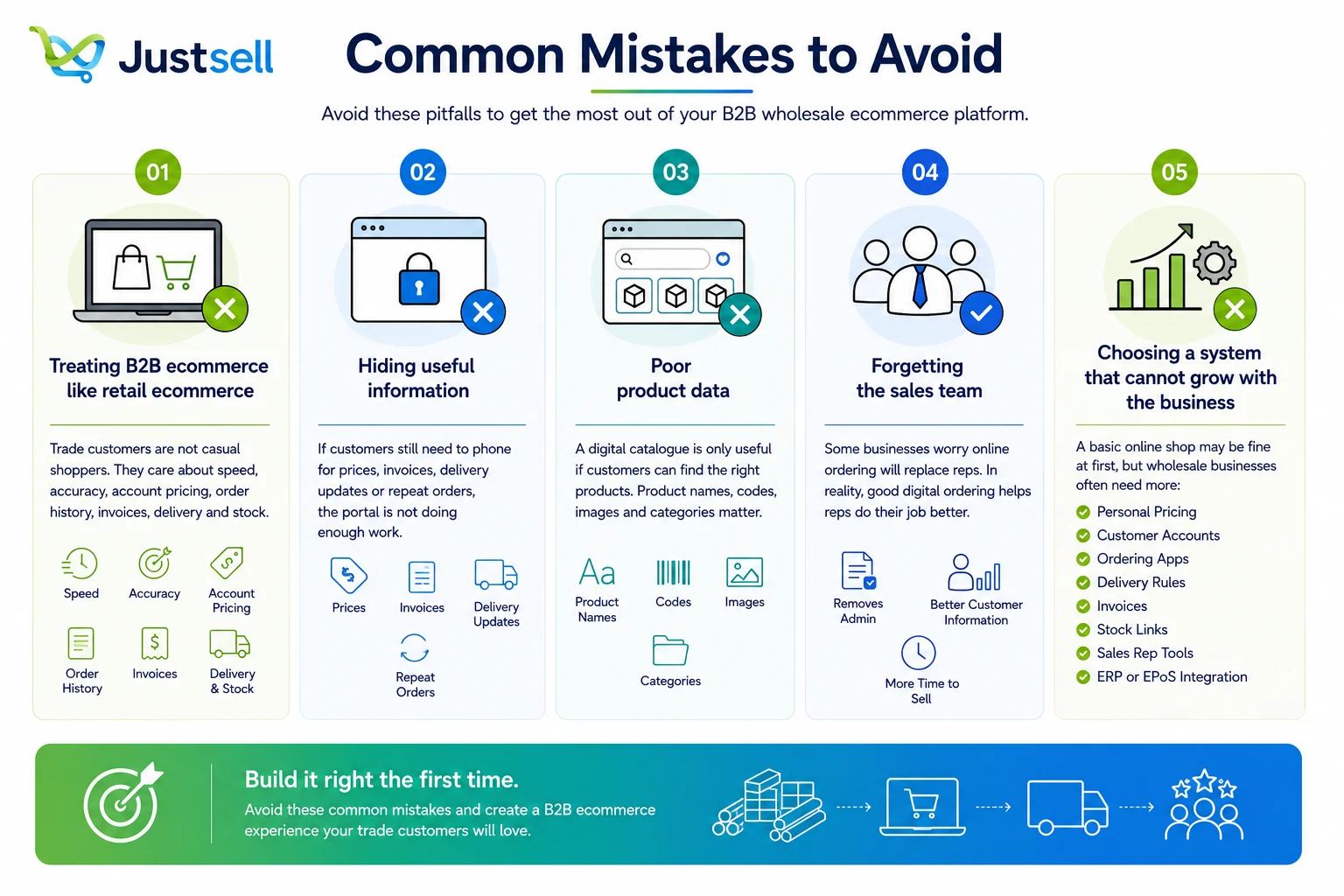
A basic online shop may be fine at first, but wholesale businesses often need more: personal pricing, customer accounts, ordering apps, delivery rules, invoices, stock links, sales rep tools and ERP or EPoS integration.
Where JustSell fits
JustSell is built for businesses that need more than a basic online shop.
For wholesale suppliers, distributors, trade merchants and building material suppliers, the useful parts are practical: customer ordering portals, personal pricing, trade ordering apps, customer order history, sales rep tools, stock control, delivery management and integration with other systems.
That matters because the goal is not just to take online orders. The goal is to reduce order errors, reduce manual admin and make repeat ordering easier for trade customers.
JustSell also works on a fixed subscription model with 0% commission, which may suit wholesalers who do not want their platform costs to rise every time sales grow.
For businesses used to dealing with platforms that take a cut of every sale, that can make a real difference.
It is not about replacing relationships. It is about making the routine part of the relationship easier.
Your customers still know your team. They still trust your business. They simply get a faster way to order from you.
FAQ Section
B2B wholesale ecommerce is online ordering between businesses. It allows trade customers, retailers, contractors, distributors or other business buyers to order products through a website, trade portal or ordering app instead of placing every order by phone, email or manual form.
Normal ecommerce is usually built for individual shoppers. B2B ecommerce is built for trade buying. It often includes customer-specific pricing, bulk ordering, repeat orders, invoices, account terms, sales rep tools, delivery rules and access to order history.
A wholesale ordering system is software that helps wholesale suppliers receive, manage and process customer orders. A good system lets customers place orders online, reorder from past orders, see their own prices and reduce the need for manual order entry.
A customer ordering portal gives trade customers a self-service way to place orders, check order history, access invoices, view documents and manage repeat purchases. This reduces admin for the supplier and gives customers a faster way to buy.
Yes. Online ordering can reduce mistakes by letting customers choose from the correct products, prices, pack sizes and order history. It removes many of the errors that happen when orders are taken from phone calls, handwritten notes, emails or unclear messages.
Yes, especially when customers are often away from a desk. Builders, field teams, retailers, warehouse buyers and food service customers can place orders quickly from mobile. A branded B2B ordering app can also make repeat orders easier and help customers stay connected with updates.
Final thoughts
B2B wholesale ecommerce is not about forcing customers away from people.
It is about removing the friction that slows everyone down.
Customers want faster repeat orders. Your team wants fewer order mistakes. Sales reps want better information. Operations teams want cleaner order flow. Business owners want growth without admin growing at the same speed.
A wholesale ecommerce platform can help with all of that, but only when it is built around real trade ordering.
For wholesalers, distributors, trade merchants and building material suppliers, the opportunity is clear: make ordering easier and customers will use it more often.
JustSell is worth exploring if you want a B2B ecommerce platform that supports customer portals, branded ordering apps, repeat ordering, personal pricing, sales reps, stock, delivery and back-office connections without taking commission on your sales.
The businesses that win are not always the ones with the biggest catalogues. Often, they are the ones that are easiest to buy from.
Related Articles
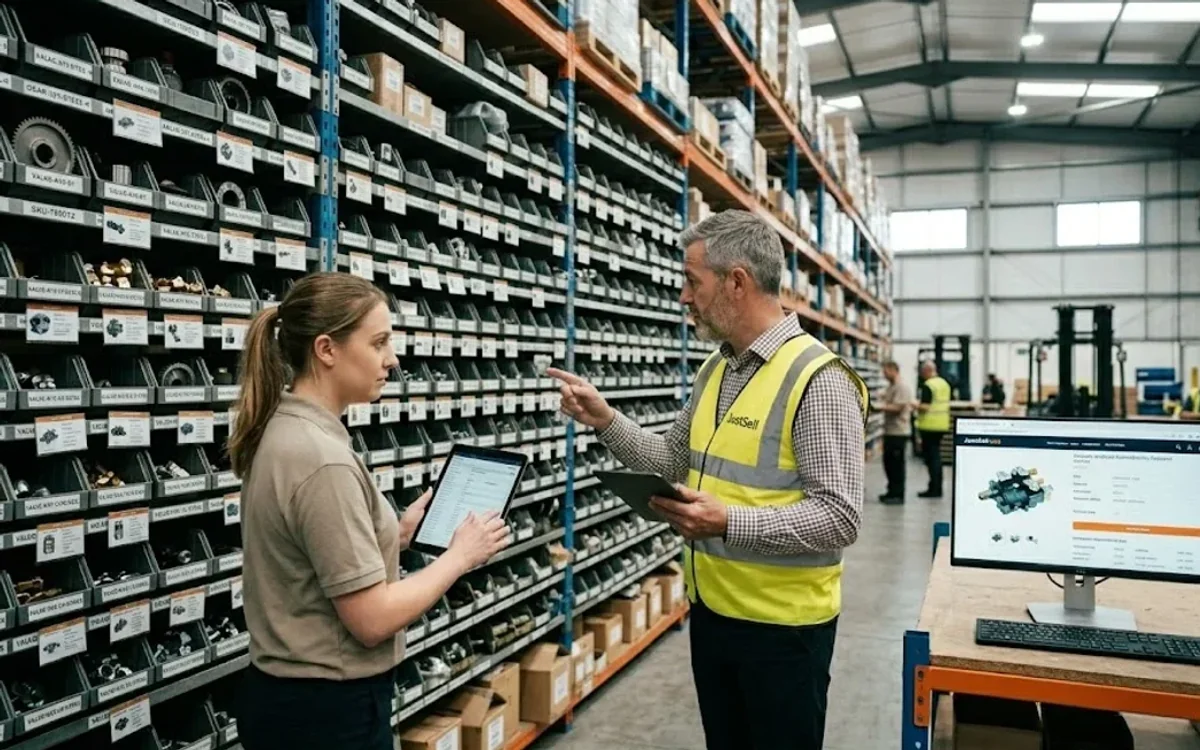
How Manufacturing and Engineering Distributors Can Manage Complex Product Catalogues More Effectively
Engineering catalogues run to tens of thousands of SKUs, each with sizes, materials, ratings and certifications. This guide covers why basic ecommerce falls short, how technical product structures and filtering improve discovery, and where customer-specific catalogues help.
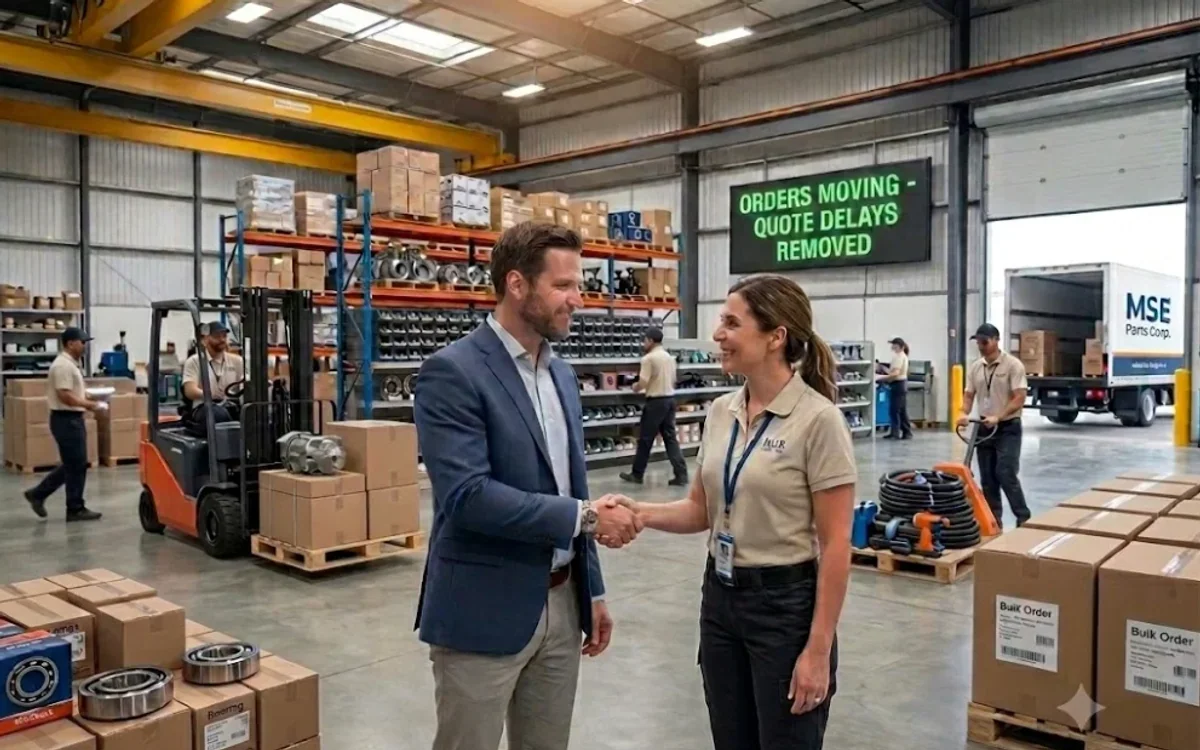
How Manufacturing and Engineering Distributors Can Reduce Delays Caused by Quotes and Negotiated Pricing
Manufacturing procurement runs on quotes and negotiated pricing, and every approval adds delay. This guide covers what slow quoting costs, how customer-specific pricing cuts manual enquiries, and how quote-to-order workflows let buyers purchase faster.
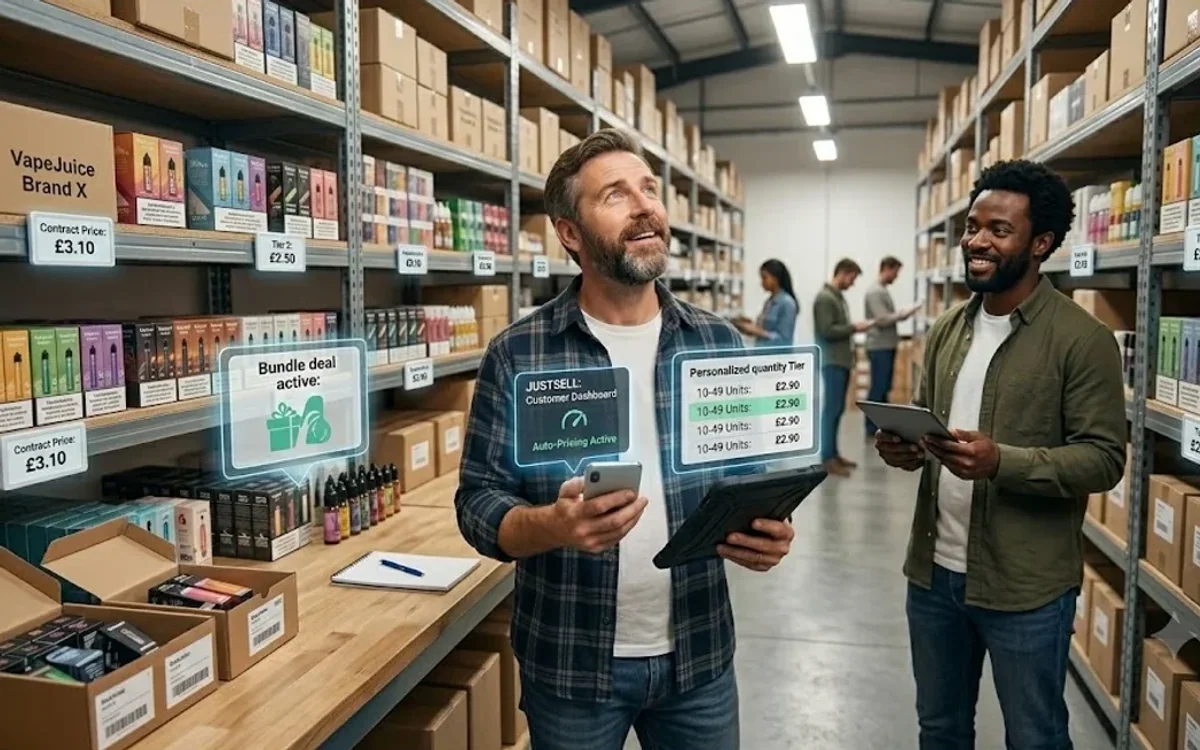
Managing Customer-Specific Pricing in Vape Wholesale: How to Reduce Admin and Increase Sales
When every customer has a different price list, pricing turns into admin. This guide covers the types of wholesale pricing, what manual processes cost, and how customer groups, tiers and promotions increase order values.