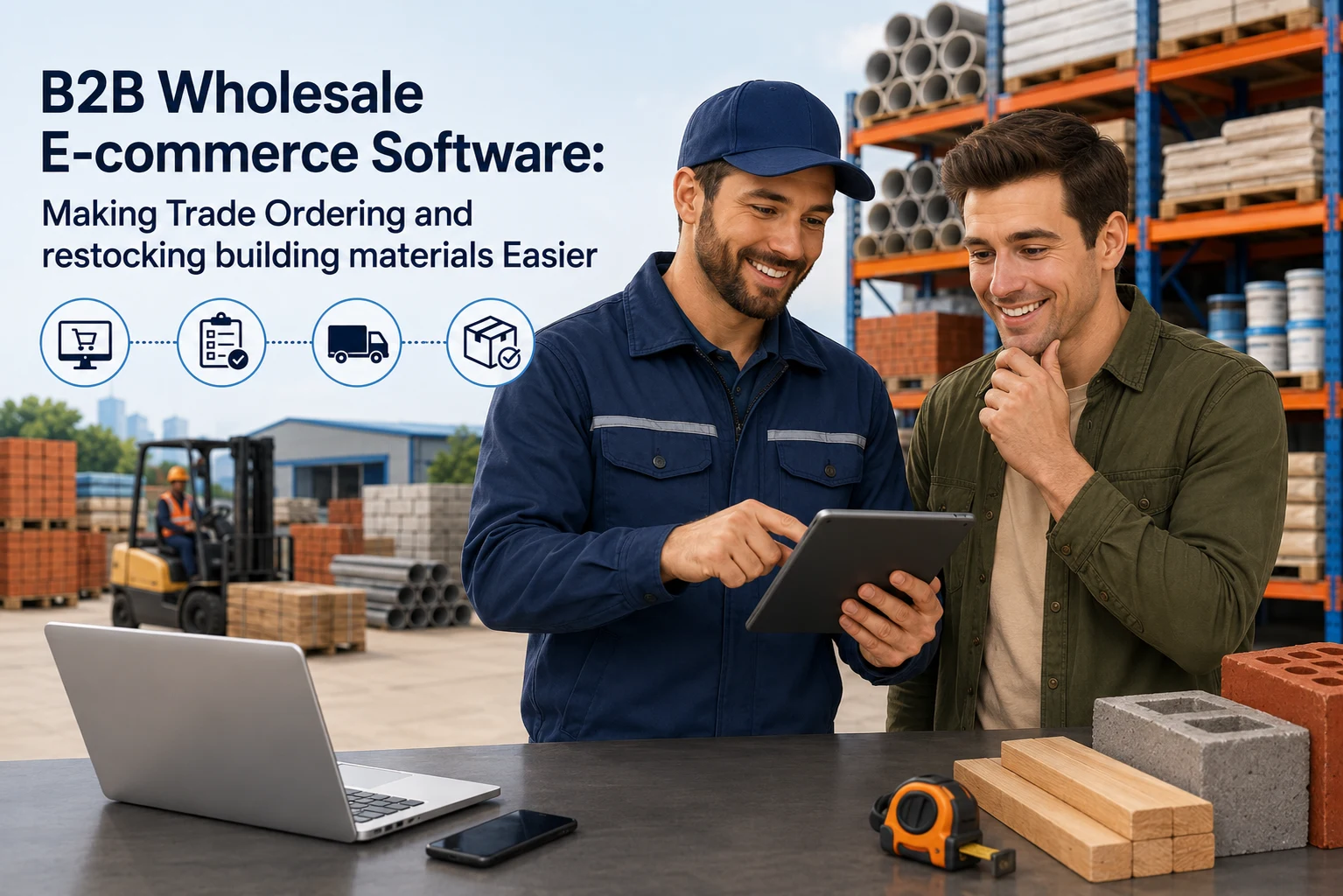
B2B Wholesale E-commerce Software: Making Trade Ordering and restocking building materials Easier
Synopsis
A short, practical look at what B2B wholesale ecommerce software actually does for a trade supplier: why merchants are moving online, the problems it solves, what a good trade portal includes, and the mistakes that undo the investment.
Table of Contents
Introduction
Trade customers do not want ordering to feel hard.
A builder wants to repeat last month’s order without ringing three times. A joiner wants timber pricing before the day starts. A contractor wants to know if materials can be delivered to site this week. Your team wants fewer emails, fewer mistakes and less time spent typing orders into another system.
That is where B2B wholesale e-commerce software helps.
It is not just an online shop. For builders merchants, timber suppliers, fixings and fasteners wholesalers, industrial suppliers, a normal retail-style website is often too simple. Trade customers need account prices, credit terms, repeat orders, invoices, quotes, delivery options and stock information.
A good B2B ordering system gives customers a quicker way to buy while giving your team fewer admin jobs to deal with.
What It Does
B2B wholesale e-commerce software lets trade customers log in and order from you online.
Once logged in, customers can see their own prices, repeat previous orders, download invoices, request quotes, choose delivery or collection, view product details and pay or order on account.
This is different from a basic consumer shop.
Retail e-commerce shows one public price and expects card payment at checkout. Trade wholesale is not that simple. One customer may have special rates on timber. Another may get a discount on fixings. A larger contractor may buy on credit and need approval before an order is placed.
If your system cannot handle those rules, customers will still have to phone or email. Then the website becomes another job instead of making life easier.
Why Trade Suppliers Are Moving Online
Most trade customers still value people. They still want advice, relationships and when an order is complex.
But they also want self-service for simple jobs.
Nobody wants to wait for a call back just to reorder screws, download an invoice or check whether a previous order has been sent.
Online ordering does not replace your sales team. Done properly, it removes the boring admin that stops them selling.
Instead of retyping repeat orders, your team can spend more time helping key accounts, quoting bigger jobs, winning new customers and bringing old customers back.
The Problems It Solves
Many trade suppliers deal with the same daily issues.
Orders arrive by phone, email, spreadsheet, text message and sales rep notes. Staff check prices, check stock, type the order in, send confirmation, answer invoice questions and update the warehouse.
That creates mistakes.
A wrong SKU, pack size, length, grade or delivery note can delay a job and annoy the customer.
B2B e-commerce gives customers a cleaner way to order. They can use saved baskets, order history, quick add by SKU and product search. Your team spends less time checking the same details over and over.
It also helps with pricing. Customer-specific pricing is one of the biggest reasons standard e-commerce platforms struggle with trade wholesale. A proper B2B system should show the right price to the right customer after login.
Stock is another big one. You do not always have to show exact stock numbers. Simple labels like “in stock”, “low stock”, “available to order” or “call for lead time” are often enough.
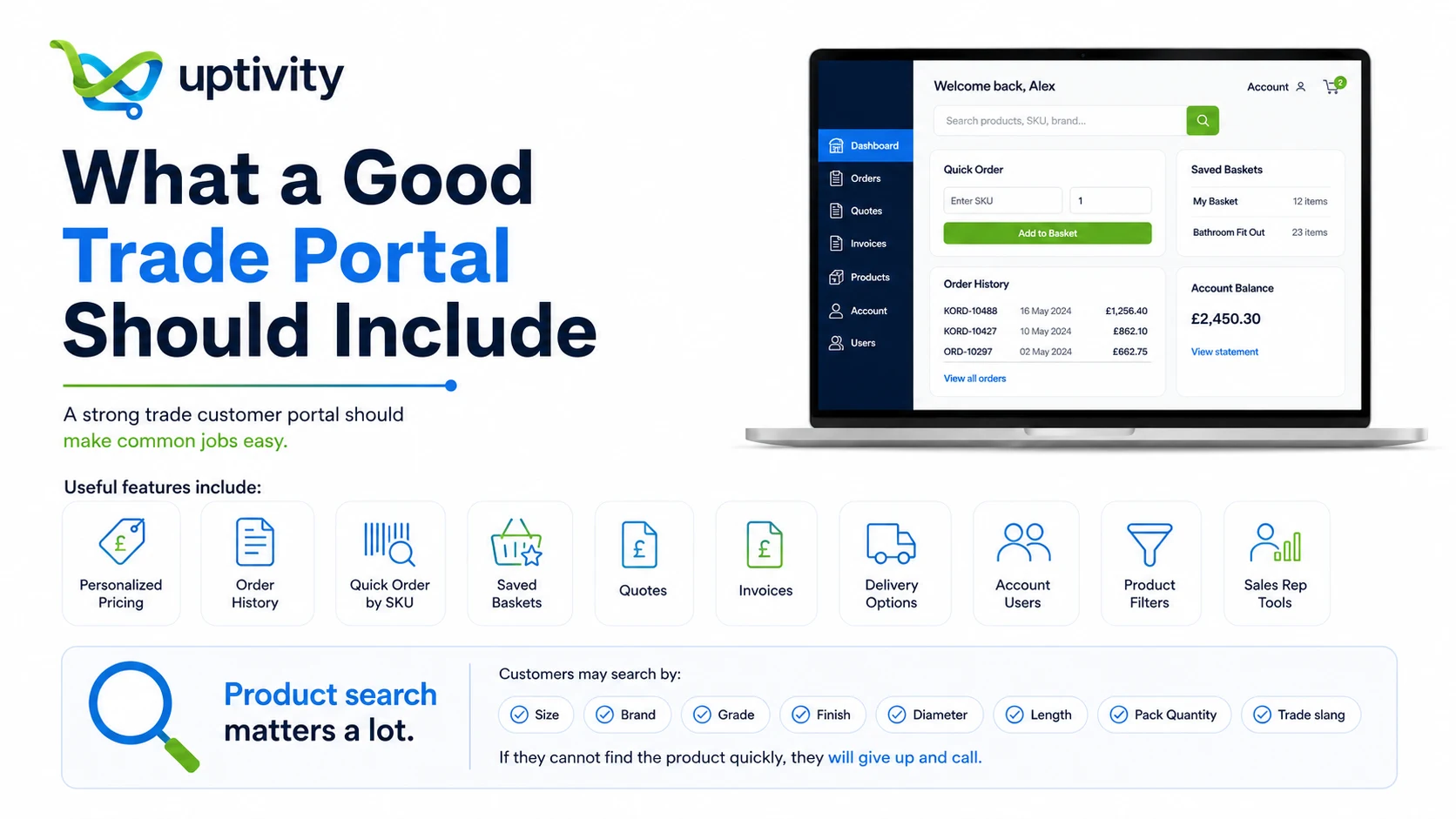
What a Good Trade Portal Should Include
A strong trade customer portal should make common jobs easy.
Useful features include personalized pricing, order history, quick order by SKU, saved baskets, quotes, invoices, delivery options, account users, product filters, sales rep tools and stock information.
Product search matters a lot. Customers may search by size, brand, grade, finish, diameter, length, pack quantity or trade slang. If they cannot find the product quickly, they will give up and call.
Where JustSell Fits
JustSell is useful for trade businesses that want a branded customer portal without paying commission on every order.
It is built around the way B2B customers actually buy: account pricing, order history, invoices, quotes, documents, delivery tracking and sales rep support.
A sales rep can view customer history, check stock, raise quotes and support customers while out on the road. Customers can reorder and access documents themselves. Accounts teams get fewer invoice requests. Sales teams get more time back.
That is the real value. Not just “selling online”, but making everyday trade ordering less painful.
Mistakes to Avoid
Avoid software that looks good but does not fit how your business works.
A retail platform may be fine for simple online selling. But if you need trade pricing, credit accounts, quote handling, rep ordering, branch collection and invoice access, you need something built for B2B.
Another mistake is launching with messy product data. If product names, sizes, filters and pack details are unclear, customers will not trust the portal.
Do not force every customer online overnight either. Start with loyal customers who place repeat orders. Let them test it. Improve it before rolling it out to everyone.
FAQ: B2B Wholesale E-commerce Software
It is online ordering software for businesses that sell to trade customers, wholesalers, contractors, merchants or other companies. It includes trade pricing, account logins, repeat orders, quotes, invoices and customer portals.
Normal e-commerce is built for consumers. B2B e-commerce is built for trade buying, so it handles customer-specific prices, credit accounts, larger orders, VAT, quotes, account documents and repeat purchasing.
Usually, yes. Builders merchants often need branch collection, bulky delivery, trade accounts, product variants, credit limits, customer prices and quote-based ordering.
Yes. It is a strong fit because customers often reorder the same products and search by SKU, size, finish, diameter, length, thread type, brand or pack quantity.
No. It should reduce repetitive admin so salespeople can spend more time helping customers, quoting bigger jobs and building better relationships.
It should include login, personalized prices, order history, repeat ordering, invoices, statements, delivery updates, quotes, saved baskets and account documents.
Conclusion
A modern B2B ecommerce platform is no longer a competitive advantage-it is becoming a business necessity.
Customers expect instant trade pricing, online wholesale ordering, self-service account management, and real-time stock visibility. Businesses that continue relying on manual processes often experience slower sales cycles, higher operational costs, and missed revenue opportunities.
The most successful distributors, manufacturers, and trade suppliers are investing in digital ordering systems that streamline operations, improve customer experience, and support long-term growth.
Uptivity helps businesses achieve these goals through integrated cloud-based software that connects ecommerce, inventory management, operations, customer service, delivery management, and business automation into a single platform. By eliminating silos and automating critical processes, businesses can improve productivity, increase sales, and deliver the digital experience today's customers expect.
Related Articles
How Manufacturing and Engineering Distributors Can Manage Complex Product Catalogues More Effectively
Engineering catalogues run to tens of thousands of SKUs, each with sizes, materials, ratings and certifications. This guide covers why basic ecommerce falls short, how technical product structures and filtering improve discovery, and where customer-specific catalogues help.

How Manufacturing and Engineering Distributors Can Reduce Delays Caused by Quotes and Negotiated Pricing
Manufacturing procurement runs on quotes and negotiated pricing, and every approval adds delay. This guide covers what slow quoting costs, how customer-specific pricing cuts manual enquiries, and how quote-to-order workflows let buyers purchase faster.

Managing Customer-Specific Pricing in Vape Wholesale: How to Reduce Admin and Increase Sales
When every customer has a different price list, pricing turns into admin. This guide covers the types of wholesale pricing, what manual processes cost, and how customer groups, tiers and promotions increase order values.