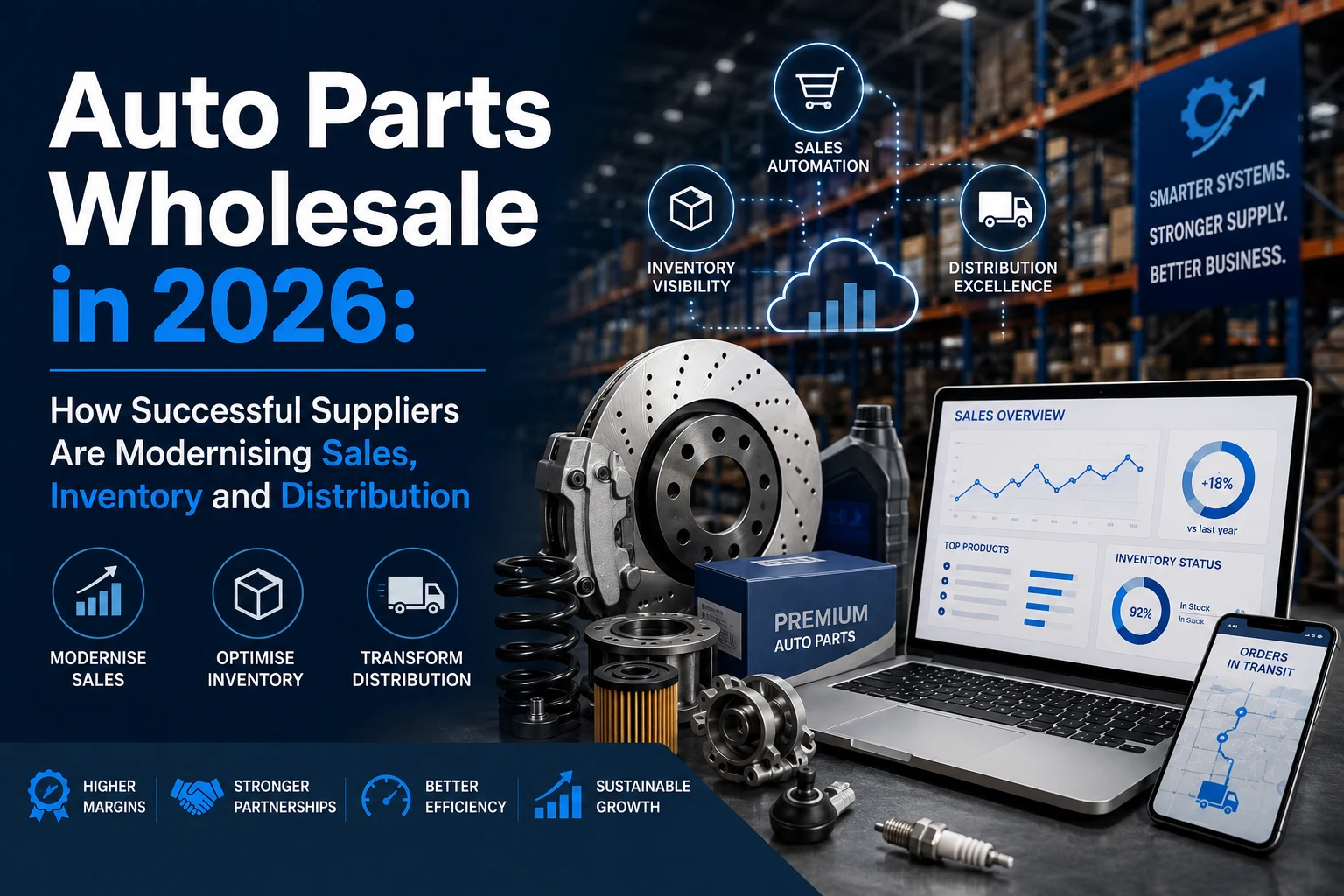
Auto Parts Wholesale in 2026: How Successful Suppliers Are Modernising Sales, Inventory and Distribution
Synopsis
How the auto parts wholesale market is changing, OEM versus aftermarket, and what buyers now expect from a supplier. Covers distribution networks, inventory management, online wholesale, and choosing an ecommerce platform.
Table of Contents
- 1.Introduction
- 2.Why the Auto Parts Wholesale Market Is Changing
- 3.The Difference Between OEM and Aftermarket Parts
- 4.What Buyers Expect from a Modern Automotive Parts Supplier
- 5.Building a Strong Automotive Distribution Network
- 6.Automotive Inventory Management: A Critical Success Factor
- 7.The Rise of Online Auto Parts Wholesale
- 8.How B2B Auto Parts Sales Are Evolving
- 9.Choosing the Right Auto Parts Ecommerce Platform
- 10.How JustSell Helps
- 11.Conclusion
- 12.Frequently Asked Questions
Introduction
The automotive aftermarket continues to evolve at a remarkable pace. Customers now expect instant access to product information, real-time stock visibility, competitive pricing and fast delivery. For businesses involved in auto parts wholesale, keeping up with these expectations can be challenging.
Whether you're an independent motor factor, a growing automotive parts supplier, a garage purchasing parts daily, or an entrepreneur entering the market, success depends on more than simply holding stock. Modern buyers want convenience, transparency and a seamless purchasing experience.
At the same time, increasing competition, supply chain pressures and changing vehicle technologies are forcing businesses to rethink how they manage sales, inventory and customer relationships.
This article explores how the wholesale auto parts industry is changing, the challenges businesses face, and the practical steps successful suppliers are taking to stay competitive and profitable.
Why the Auto Parts Wholesale Market Is Changing
The global automotive aftermarket is worth hundreds of billions of pounds and continues to grow as vehicles remain on the road longer and owners seek cost-effective repair solutions.
Several factors are reshaping the industry:
- Growth in online purchasing
- Increased demand for same-day delivery
- More complex vehicle technology
- Rising customer expectations
- Expansion of marketplace selling
- Greater competition from national distributors
Traditionally, many suppliers relied heavily on telephone orders and trade counter sales. While these channels remain important, modern customers increasingly expect digital ordering options.
A garage manager sourcing brake components today may prefer placing an order through an online catalogue at 10pm rather than waiting until the next morning to call a supplier.
For many businesses, digital transformation is no longer optional.
The Difference Between OEM and Aftermarket Parts
One of the most important considerations when sourcing products is understanding OEM vs aftermarket parts.
OEM Parts
OEM (Original Equipment Manufacturer) parts are produced by the vehicle manufacturer or their approved suppliers.
Benefits include:
- Guaranteed compatibility
- Manufacturer specifications
- Brand recognition
Potential drawbacks:
- Higher costs
- Reduced margins for resellers
- Limited supplier options
Aftermarket Parts
Aftermarket parts are produced by third-party manufacturers.
Benefits include:
- Lower purchasing costs
- Greater profit margins
- Wider product availability
- More supplier choice
Potential drawbacks:
- Quality variations between manufacturers
- Additional compatibility verification
For many auto parts resellers, a balanced product offering that includes both OEM and quality aftermarket products delivers the best commercial results.
What Buyers Expect from a Modern Automotive Parts Supplier
Today's buyers are far more informed than they were a decade ago.
Whether purchasing from a local garage parts supplier or a national auto parts distributor, customers increasingly expect:
Real-Time Stock Availability
Customers want confidence that products are actually available before placing an order.
Outdated stock information leads to:
- Cancelled orders
- Frustrated customers
- Increased administration
Fast Product Search
Large catalogues can contain tens of thousands of SKUs.
Effective search functionality should allow customers to find products by:
- Registration number
- OEM reference
- Product category
- Vehicle make and model
- Manufacturer code
Transparent Pricing
Trade customers expect clear pricing structures and account-specific discounts.
Flexible Ordering
Customers increasingly want multiple ordering methods:
- Website ordering
- Mobile apps
- Trade portals
- Marketplace integration
- Sales representative ordering
The easier purchasing becomes, the more likely customers are to place repeat orders.
Building a Strong Automotive Distribution Network
A reliable automotive distribution network is often the difference between growth and stagnation.
Many wholesalers focus heavily on acquiring stock but underestimate the importance of distribution efficiency.
Key considerations include:
Supplier Diversification
Relying on a single supplier creates risk.
Leading businesses often maintain relationships with multiple manufacturers and distributors to ensure continuity.
Regional Warehousing
Strategically located stock can reduce delivery times significantly.
Delivery Management
Fast and accurate delivery remains a major competitive advantage.
Businesses should monitor:
- Delivery performance
- Failed deliveries
- Driver productivity
- Customer satisfaction
Data Accuracy
The strongest car parts supply chain operations maintain accurate information across:
- Products
- Inventory
- Pricing
- Customer accounts
- Supplier records
Without reliable data, operational efficiency quickly deteriorates.
Automotive Inventory Management: A Critical Success Factor
Poor automotive inventory management can destroy profitability.
Holding too much stock ties up cash.
Holding too little stock results in missed sales opportunities.
Successful wholesalers use data to balance both risks.
Key Inventory Metrics to Monitor
Stock Turnover
Measures how quickly inventory sells.
Higher turnover generally indicates healthier stock management.
Dead Stock
Products that rarely sell consume warehouse space and working capital.
Reorder Points
Automated reorder triggers help prevent stock shortages.
Seasonal Demand
Certain products experience predictable seasonal spikes.
Examples include:
- Batteries during winter
- Air conditioning components during summer
- Wiper blades during rainy seasons
Businesses that forecast demand accurately gain a significant advantage.
The Rise of Online Auto Parts Wholesale
Digital commerce continues to reshape the industry.
Many buyers now begin sourcing by searching online before contacting suppliers directly.
This has fuelled growth in:
- Online auto parts wholesale
- Trade ordering portals
- Customer self-service platforms
- Marketplace selling
The benefits are substantial.
Increased Sales Availability
Unlike traditional trade counters, online systems can accept orders 24 hours a day.
Reduced Administration
Customers can place orders without requiring manual processing.
Wider Geographic Reach
An online presence allows businesses to sell nationally and internationally.
Improved Customer Experience
Modern buyers value convenience.
Businesses that make purchasing easier often achieve stronger customer retention.
How B2B Auto Parts Sales Are Evolving
Traditional B2B auto parts sales relied heavily on phone calls and field sales representatives.
While these methods remain valuable, modern buyers increasingly expect self-service capabilities.
Today's trade customers want:
- Instant account access
- Online quotations
- Product availability checks
- Order history
- Invoice visibility
- Mobile ordering
Businesses that fail to offer these capabilities risk losing customers to more digitally advanced competitors.
The trend is especially noticeable among younger purchasing managers who are accustomed to digital procurement processes.
Choosing the Right Auto Parts Ecommerce Platform
Selecting the right auto parts ecommerce platform is one of the most important decisions for growing suppliers.
The wrong system can create operational bottlenecks and limit future growth.
When evaluating platforms, consider:
Inventory Control
Can stock levels update automatically across all sales channels?
Trade Pricing
Can different customer groups receive different pricing structures?
Product Catalogue Management
Can large automotive catalogues be managed efficiently?
Marketplace Integration
Can products be synchronised with eBay, Amazon and other marketplaces?
Customer Experience
Can buyers easily find the products they need?
Scalability
Will the platform support future growth?
Many businesses discover that generic ecommerce systems struggle with the complexity of automotive product data and wholesale pricing requirements.
How JustSell Helps
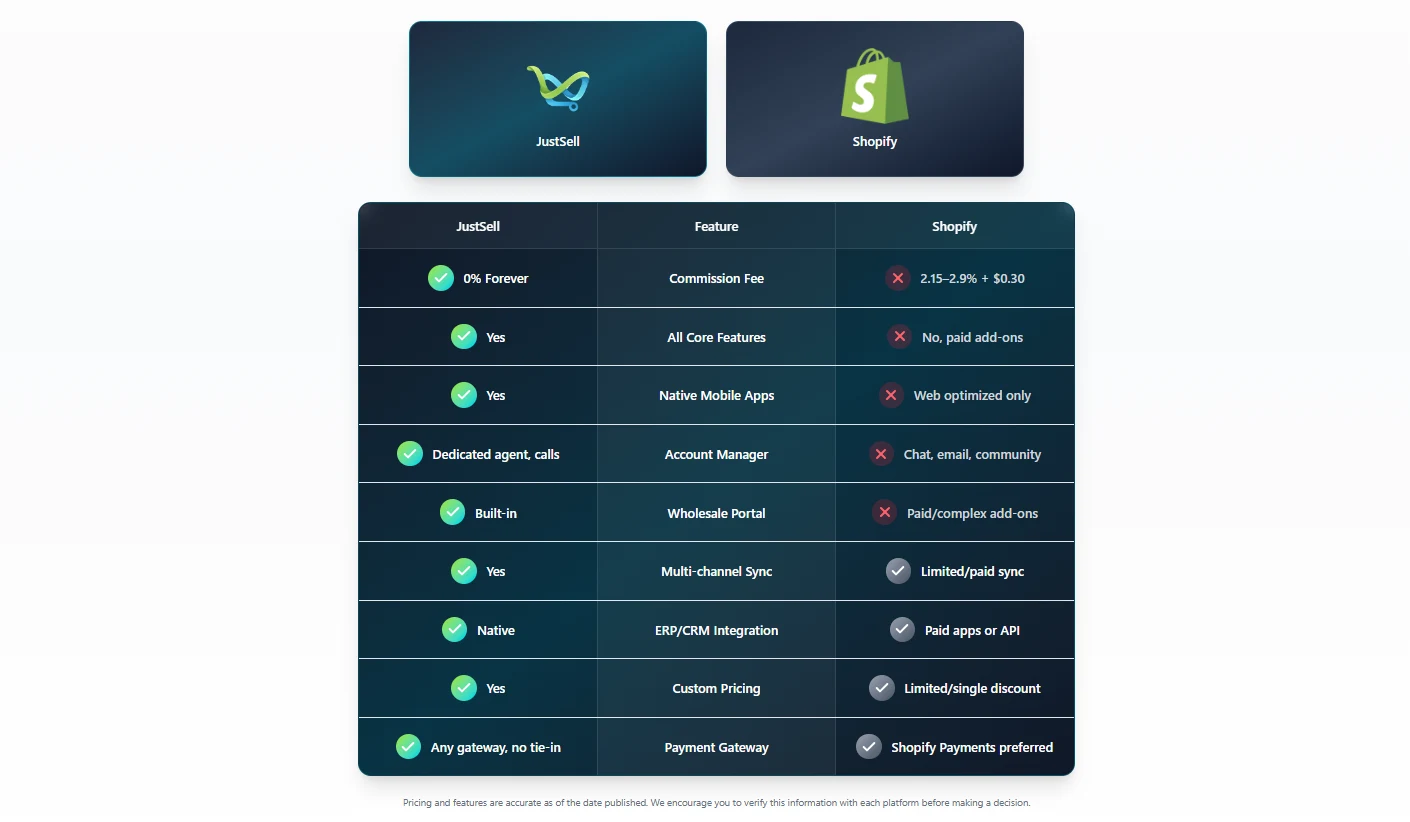
Managing a modern automotive wholesale supplier operation often involves balancing multiple systems, spreadsheets, marketplaces and ordering channels.
As businesses grow, this complexity can become a major obstacle.
JustSell helps simplify operations by bringing key functions together into a single platform.
For auto parts businesses, this can mean:
- Managing products, stock and pricing from one place
- Supporting both B2B and B2C sales
- Providing trade customers with online ordering options
- Keeping inventory information accurate across channels
- Connecting marketplace sales with central stock management
- Supporting customer ordering apps for repeat buyers
- Improving visibility across orders, customers and inventory
For example, an auto parts distributor selling through a website, trade accounts and online marketplaces can manage inventory centrally rather than manually updating multiple systems.
Similarly, a growing bulk auto parts supplier can provide trade customers with a streamlined ordering experience while maintaining consistent pricing and stock control.
The result is often less administration, fewer stock discrepancies and a smoother buying experience for customers.
Conclusion
Success in auto parts wholesale is no longer determined solely by product availability and pricing.
Modern buyers expect convenience, accurate stock information, flexible ordering and fast fulfilment.
Businesses that invest in strong automotive inventory management, efficient distribution processes and digital sales capabilities are often better positioned to compete in an increasingly demanding market.
Whether you're an established wholesale auto parts business or a growing automotive ecommerce operation, the key is creating a buying experience that makes it easy for customers to find, order and receive the products they need.
If you're looking for a simpler way to manage online sales, stock, customer ordering and business operations from one place, it's worth exploring what JustSell can offer.
Frequently Asked Questions
A wholesaler typically purchases products in large volumes and sells to retailers, garages and workshops. An auto parts distributor may also manage logistics, regional supply and manufacturer relationships within a wider distribution network.
Look for strong inventory management, trade pricing capabilities, marketplace integrations, catalogue management and support for both B2B and B2C sales. Scalability is also important as your business grows.
Yes, online auto parts wholesale can be highly profitable when supported by efficient inventory management, strong supplier relationships and competitive pricing. Digital sales channels can also expand market reach significantly.
Consider product availability, delivery performance, pricing structure, technical support, catalogue quality and stock accuracy. Reliable supply chain management is often just as important as price.
Yes. JustSell supports B2B and B2C selling, inventory management, customer ordering, marketplace integration and centralised product management, making it suitable for many automotive parts suppliers and resellers looking to modernise operations.
Related Articles

How Manufacturing and Engineering Distributors Can Manage Complex Product Catalogues More Effectively
Engineering catalogues run to tens of thousands of SKUs, each with sizes, materials, ratings and certifications. This guide covers why basic ecommerce falls short, how technical product structures and filtering improve discovery, and where customer-specific catalogues help.

How Manufacturing and Engineering Distributors Can Reduce Delays Caused by Quotes and Negotiated Pricing
Manufacturing procurement runs on quotes and negotiated pricing, and every approval adds delay. This guide covers what slow quoting costs, how customer-specific pricing cuts manual enquiries, and how quote-to-order workflows let buyers purchase faster.

Managing Customer-Specific Pricing in Vape Wholesale: How to Reduce Admin and Increase Sales
When every customer has a different price list, pricing turns into admin. This guide covers the types of wholesale pricing, what manual processes cost, and how customer groups, tiers and promotions increase order values.