Auto Parts Wholesale in 2026: How to Find the Right Suppliers, Improve Margins and Grow Your Automotive Business
Synopsis
A guide to sourcing and selling auto parts at trade: the types of supplier, what to look for in one, why online wholesale is growing, inventory as a profit driver, dropshipping, distribution networks and building an ecommerce strategy.
Table of Contents
- 1.Introduction
- 2.Why Auto Parts Wholesale Matters More Than Ever
- 3.Understanding the Different Types of Automotive Parts Suppliers
- 4.What to Look for in a Wholesale Auto Parts Supplier
- 5.The Growing Importance of Online Auto Parts Wholesale
- 6.Automotive Inventory Management: The Hidden Profit Driver
- 7.Managing B2B Auto Parts Sales More Effectively
- 8.Dropshipping Auto Parts: Opportunity or Risk?
- 9.Strengthening Your Automotive Distribution Network
- 10.Building an E-commerce Strategy for Auto Parts Sales
- 11.How JustSell Helps
- 12.The Future of Automotive Procurement
- 13.Frequently Asked Questions
- 14.Conclusion
Introduction
The automotive aftermarket continues to evolve at pace. Vehicle technology is becoming more complex, customer expectations are rising, and competition is increasing across online and traditional sales channels.
For businesses involved in auto parts wholesale, these changes create both opportunities and challenges. Whether you're an independent motor factor, garage owner, automotive reseller, fleet maintenance company or e-commerce retailer, your success often depends on one critical factor: access to reliable parts at the right price.
Finding the right wholesale auto parts supplier is no longer just about securing stock. It is about building a dependable supply chain, maintaining healthy margins, improving customer service and managing inventory efficiently.
In this article, we'll explore how today's automotive businesses can source products effectively, choose the right suppliers, manage stock more efficiently and build a stronger automotive parts business in an increasingly digital marketplace.
Why Auto Parts Wholesale Matters More Than Ever
The global automotive aftermarket remains a major sector, driven by longer vehicle ownership cycles, rising repair costs and increasing demand for replacement components.
For retailers and workshops, buying through a trusted automotive parts supplier offers several advantages:
- Lower purchasing costs
- Better stock availability
- Faster fulfilment
- Access to a wider product range
- Improved profit margins
- Stronger customer retention
However, not all suppliers offer the same level of reliability.
Late deliveries, inaccurate stock levels and inconsistent product quality can quickly damage customer relationships and profitability.
As a result, businesses are placing greater importance on selecting the right auto parts distributor and modernising how they manage purchasing and sales.
Understanding the Different Types of Automotive Parts Suppliers
OEM Suppliers
Original Equipment Manufacturer (OEM) parts are produced by the same manufacturers that supply vehicle manufacturers.
Benefits include:
- Guaranteed compatibility
- Consistent quality
- Manufacturer warranties
Potential drawbacks:
- Higher purchase costs
- Lower profit margins
- Limited supplier options
Aftermarket Suppliers
The automotive aftermarket industry has grown significantly over the past decade.
Aftermarket components are produced by independent manufacturers and often provide:
- Lower costs
- Wider availability
- Greater product variety
Potential drawbacks include:
- Quality variation between brands
- Increased due diligence when sourcing products
For many businesses, aftermarket auto parts wholesale offers the best balance between affordability and profitability.
Specialist Suppliers
Many businesses also work with specialist suppliers that focus on:
- Performance parts
- Commercial vehicle components
- Electric vehicle parts
- Motorsport products
- Vehicle accessories
These suppliers can help businesses differentiate themselves in competitive markets.
What to Look for in a Wholesale Auto Parts Supplier
Choosing a bulk auto parts supplier should involve more than comparing prices.
Product Availability
Consistent stock levels are essential.
Ask suppliers:
- How frequently stock levels are updated
- Whether backorders are common
- What lead times apply to high-demand items
Catalogue Depth
A comprehensive automotive parts catalogue can reduce the need to work with multiple suppliers.
Look for suppliers offering:
- Engine components
- Braking systems
- Suspension parts
- Electrical components
- Service items
- Body panels
- Accessories
Delivery Performance
Fast delivery is often a competitive advantage.
A supplier with reliable logistics can help garages complete repairs faster and improve customer satisfaction.
Technical Support
Good suppliers provide:
- Vehicle compatibility data
- Product specifications
- Technical documentation
- Warranty support
Digital Ordering Capabilities
Modern businesses increasingly prefer suppliers offering:
- Online ordering
- API integrations
- Live stock visibility
- Automated reordering
These capabilities can significantly reduce administrative workload.
The Growing Importance of Online Auto Parts Wholesale
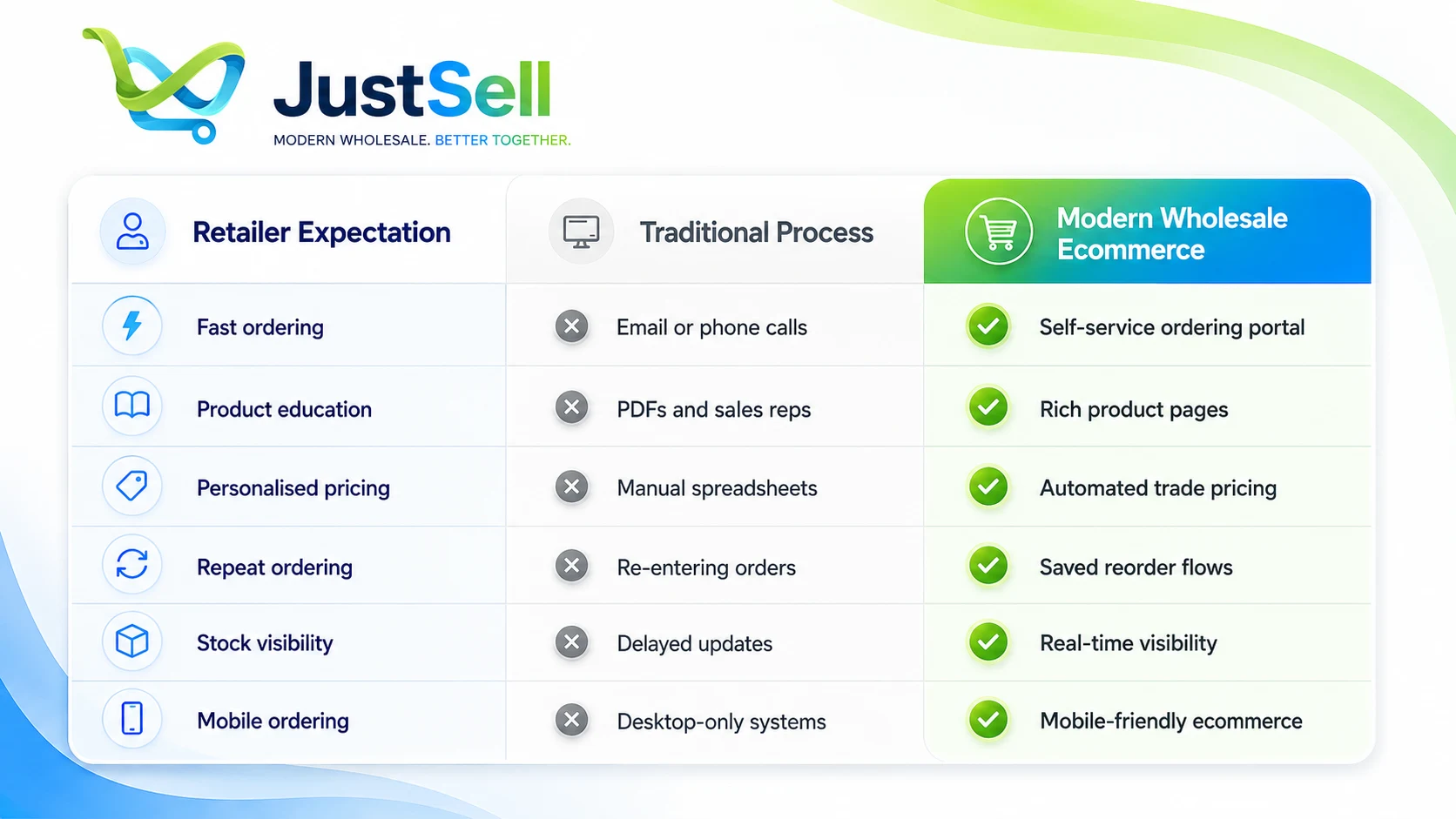
The shift towards online auto parts wholesale has transformed how automotive businesses purchase stock.
Traditionally, purchasing involved phone calls, paper catalogues and manual order processing.
Today, businesses can:
- Compare suppliers instantly
- Access live inventory data
- Automate procurement
- Track orders in real time
- Integrate purchasing with inventory systems
For growing companies, digital procurement often delivers significant operational savings.
Benefits of Sourcing Auto Parts Online
When sourcing auto parts online, businesses typically gain:
- Greater product visibility
- Faster ordering processes
- Improved price comparison
- Better purchasing records
- Easier supplier management
However, buyers should still carefully verify supplier reputation, warranty terms and fulfilment performance.
Managing B2B Auto Parts Sales More Effectively
Many automotive businesses generate substantial revenue through trade customers.
Successful B2B auto parts sales often require different processes than consumer sales.
Trade buyers typically expect:
- Agreed pricing structures
- Credit facilities
- Quick reordering
- Account management
- Product availability guarantees
Providing a professional purchasing experience can significantly improve customer retention.
Creating Trade Auto Parts Accounts
Many wholesalers now offer dedicated trade auto parts accounts that provide:
- Custom pricing
- Account-specific discounts
- Order history access
- Faster checkout processes
These features strengthen customer relationships while simplifying repeat purchasing.
Dropshipping Auto Parts: Opportunity or Risk?
The rise of e-commerce has increased interest in dropshipping auto parts.
Under this model, products ship directly from the supplier to the customer.
Advantages include:
- Lower startup costs
- Reduced inventory requirements
- Wider product range
Potential challenges include:
- Lower margins
- Less control over fulfilment
- Increased dependency on suppliers
- Potential returns complications
Dropshipping can work well for niche products but may not suit businesses seeking maximum profitability and customer control.
Strengthening Your Automotive Distribution Network
A resilient automotive distribution network reduces operational risk.
Relying heavily on a single supplier can leave businesses vulnerable to:
- Stock shortages
- Price increases
- Supply chain disruptions
Many successful businesses build relationships with multiple suppliers to improve flexibility.
Diversification Strategies
Consider sourcing products from:
- OEM manufacturers
- Aftermarket suppliers
- Regional distributors
- Specialist product suppliers
A diversified supplier base often improves resilience and negotiating power.
Building an E-commerce Strategy for Auto Parts Sales
The automotive sector has experienced significant growth in online purchasing.
Customers increasingly expect:
- Product search functionality
- Vehicle compatibility filtering
- Mobile-friendly ordering
- Fast delivery options
- Transparent stock information
This trend is driving demand for specialised auto parts ecommerce platform solutions.
An effective e-commerce auto parts strategy should support both customer experience and operational efficiency.
Essential Features for Automotive E-commerce
Businesses should look for systems that support:
- Detailed product catalogues
- Vehicle fitment information
- Inventory synchronisation
- Multi-channel selling
- Customer account management
- Trade pricing
The goal is to make ordering easier while reducing administrative effort.
How JustSell Helps
Automotive businesses often face a common challenge: managing products, inventory, customer orders and sales channels without creating unnecessary complexity.
As product ranges grow and sales increase, spreadsheets and disconnected systems can quickly become difficult to manage.
JustSell helps address many of these challenges by providing a single platform for managing automotive sales operations.
For businesses involved in auto parts wholesale, this can mean:
- Managing products, pricing and stock from one central system
- Supporting both B2B and B2C sales
- Providing online ordering for trade customers
- Selling through multiple channels while maintaining accurate inventory
- Reducing manual administration
- Improving visibility across orders and stock levels
For example, an automotive reseller selling through its website, trade customers and online marketplaces can maintain central control of inventory while simplifying day-to-day operations.
Similarly, a garage parts supplier offering online ordering to trade customers can provide a more convenient purchasing experience while reducing order processing time.
Rather than focusing solely on selling online, the aim is to create a more connected and efficient operation that supports long-term growth.
The Future of Automotive Procurement
The future of automotive procurement is becoming increasingly digital.
Businesses are investing in systems that provide:
- Real-time stock visibility
- Automated purchasing workflows
- Better forecasting
- Integrated supplier relationships
- Faster customer ordering experiences
Companies that embrace these improvements are often better positioned to compete on service, availability and efficiency rather than price alone.
As vehicle technology continues to evolve, efficient processes will become just as important as product availability.
Frequently Asked Questions
OEM parts are produced by the original manufacturer, while aftermarket parts are produced by independent companies. Aftermarket options often provide lower costs and wider availability, though quality can vary between brands.
Look beyond pricing. Consider stock availability, delivery performance, product range, technical support, warranty policies and digital ordering capabilities when evaluating suppliers.
A good auto parts ecommerce platform should provide inventory management, product catalogues, trade pricing, customer account management, multi-channel selling and integration with business operations.
Dropshipping auto parts can reduce startup costs and inventory requirements. However, businesses should carefully assess supplier reliability, fulfilment performance and profit margins before adopting this model.
Yes. JustSell supports both B2B and B2C selling, helping automotive businesses manage products, inventory, pricing and customer ordering through a centralised platform that can support wholesale and retail operations.
Conclusion
Success in auto parts wholesale depends on far more than securing low-cost inventory.
Businesses that thrive typically combine strong supplier relationships, effective inventory management, reliable fulfilment and a modern purchasing experience.
Whether you're working with an automotive wholesale supplier, building a stronger automotive distribution network, expanding B2B auto parts sales, or developing an online sales strategy, the goal remains the same: deliver the right parts to customers efficiently and profitably.
The businesses that invest in smarter systems and stronger operational processes are often best positioned for sustainable growth.
If you're looking for a simpler way to manage online sales, stock, customer ordering and business operations from one place, it's worth exploring what JustSell can offer.
Related Articles

How Manufacturing and Engineering Distributors Can Manage Complex Product Catalogues More Effectively
Engineering catalogues run to tens of thousands of SKUs, each with sizes, materials, ratings and certifications. This guide covers why basic ecommerce falls short, how technical product structures and filtering improve discovery, and where customer-specific catalogues help.

How Manufacturing and Engineering Distributors Can Reduce Delays Caused by Quotes and Negotiated Pricing
Manufacturing procurement runs on quotes and negotiated pricing, and every approval adds delay. This guide covers what slow quoting costs, how customer-specific pricing cuts manual enquiries, and how quote-to-order workflows let buyers purchase faster.

Managing Customer-Specific Pricing in Vape Wholesale: How to Reduce Admin and Increase Sales
When every customer has a different price list, pricing turns into admin. This guide covers the types of wholesale pricing, what manual processes cost, and how customer groups, tiers and promotions increase order values.