
How Manufacturing and Engineering Distributors Can Reduce Delays Caused by Quotes and Negotiated Pricing
Your Buyer Knows What They Need. But the Order Is Stuck Waiting for a Quote.
For manufacturing and engineering parts distributors, pricing is rarely as simple as displaying a fixed price and processing an order.
Many customers operate under negotiated contracts, account-specific pricing agreements, volume discounts, approval processes, and quote-based purchasing workflows.
As a result, buyers often know exactly which products they need but still cannot place an order immediately.
Instead, they must request a quote, wait for pricing approval, receive a response, and then return to place the order.
While this process may seem normal, it often creates unnecessary delays that slow procurement, frustrate customers, and increase the risk of lost sales.
As manufacturing supply chains become increasingly focused on efficiency, distributors that simplify quoting and pricing workflows gain a significant competitive advantage.
Businesses that provide account pricing, quote-to-order processes, and customer-specific terms make purchasing faster and easier while reducing administration for both buyers and sales teams.
Synopsis
Manufacturing procurement runs on quotes and negotiated pricing, and every approval adds delay. This guide covers what slow quoting costs, how customer-specific pricing cuts manual enquiries, and how quote-to-order workflows let buyers purchase faster.
Table of Contents
- 1.Key Takeaways
- 2.Why Quoting Is Common in Manufacturing Distribution
- 3.The Challenges of Negotiated Pricing
- 4.The Hidden Cost of Delayed Quotes
- 5.Why Traditional Quote Management Falls Short
- 6.How Customer-Specific Pricing Improves Procurement Speed
- 7.Using Quote-to-Order Workflows to Reduce Friction
- 8.Why Volume Pricing Improves Customer Experience
- 9.How Digital Procurement Simplifies Complex Pricing
- 10.Why Procurement Teams Prefer Transparent Pricing
- 11.How JustSell Helps Distributors Streamline Quoting and Pricing
- 12.FAQ
- 13.Conclusion
- 14.See How JustSell Can Help Your Manufacturing Distribution Business
Key Takeaways
- Manufacturing buyers often require quotes before purchasing.
- Delayed quote approvals can slow procurement and increase frustration.
- Customer-specific pricing reduces manual pricing enquiries.
- Quote-to-order workflows help buyers purchase faster.
- Volume pricing supports larger orders and contract agreements.
- Digital pricing tools improve efficiency for both buyers and distributors.
- JustSell helps distributors automate pricing and simplify quoting processes.
Why Quoting Is Common in Manufacturing Distribution
Unlike consumer ecommerce, manufacturing procurement often involves negotiated purchasing agreements.
Customers may require:
- Contract pricing
- Volume discounts
- Project-based quotations
- Framework agreements
- Tender pricing
- Customer-specific terms
- Account-based discounts
These arrangements help distributors remain competitive while meeting customer procurement requirements.
However, they can also make the buying process significantly more complex.
The Challenges of Negotiated Pricing
Manufacturing buyers frequently operate within strict purchasing procedures.
Before placing an order, they may need to:
- Request pricing
- Obtain approvals
- Compare supplier quotes
- Verify account terms
- Confirm stock availability
This often creates delays between identifying a requirement and completing a purchase.
Common challenges include:
- Slow quote turnaround times
- Multiple approval stages
- Manual pricing calculations
- Inconsistent pricing information
- Heavy administrative workloads
The more complicated the process becomes, the slower procurement moves.
Why Traditional Quote Management Falls Short
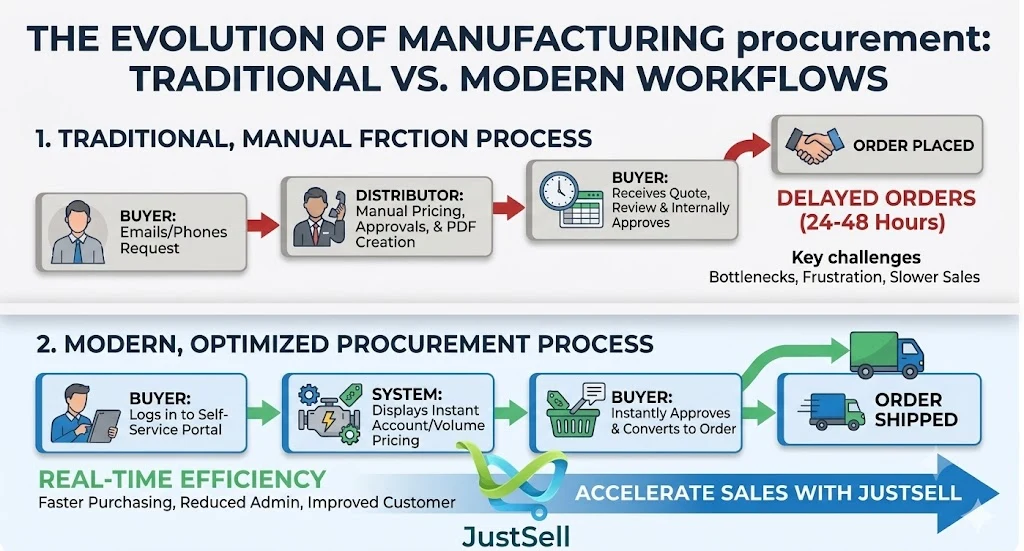
Many distributors still rely on:
- Email quote requests
- Spreadsheet pricing
- Manual approval processes
- PDF quotations
- Phone-based pricing discussions
While these methods may have worked historically, they often struggle to meet modern buyer expectations.
The problem:
Customers must wait for information that could potentially be available immediately.
Traditional vs Modern Manufacturing Quoting
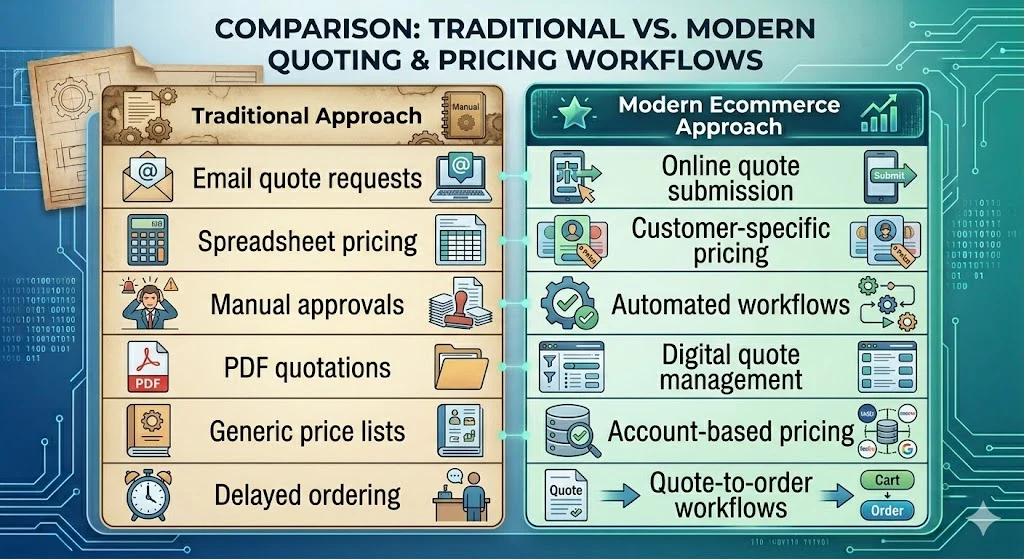
Modern wholesale ecommerce platforms help eliminate these delays while maintaining pricing flexibility.
How Customer-Specific Pricing Improves Procurement Speed
Many buyers repeatedly purchase the same products under agreed pricing structures.
Customer-specific pricing allows distributors to automatically display:
- Contract pricing
- Agreed discounts
- Account-specific rates
- Product-specific pricing
- Promotional offers
Benefits include:
- Faster purchasing decisions
- Reduced pricing enquiries
- Improved customer experience
- Greater pricing accuracy
- Reduced administrative workload
When customers can instantly see their negotiated pricing, they are more likely to complete purchases quickly.
Using Quote-to-Order Workflows to Reduce Friction
Quote-to-order workflows help bridge the gap between quotation and purchasing.
Instead of manually recreating orders after a quote is approved, buyers can move directly from quotation to order.
Benefits include:
- Faster procurement
- Reduced data entry
- Improved accuracy
- Better customer experience
- Increased conversion rates
This creates a smoother process for both distributors and customers.
Why Volume Pricing Improves Customer Experience
Volume pricing remains an important part of manufacturing procurement.
Customers often expect better pricing based on:
- Order size
- Contract commitments
- Annual purchasing volume
- Product category
Examples include:
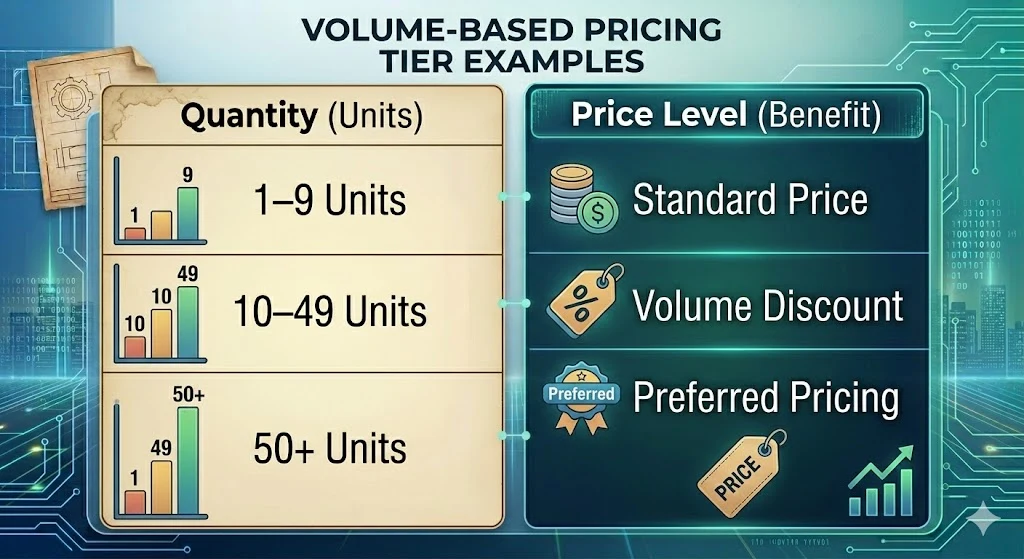
Benefits include:
- Larger average order values
- Increased customer loyalty
- Improved competitiveness
- Simplified pricing discussions
Digital pricing systems make these structures easier to manage and communicate.
How Digital Procurement Simplifies Complex Pricing
Manufacturing buyers increasingly expect digital procurement experiences that support complex pricing requirements.
Modern systems allow customers to:
- View account pricing
- Request quotes
- Access contract rates
- Check stock availability
- Place orders online
- Reorder previous purchases
Benefits include:
- Faster purchasing
- Reduced administration
- Improved transparency
- Better customer satisfaction
- Increased operational efficiency
The easier it becomes to buy, the more likely customers are to return.
Why Procurement Teams Prefer Transparent Pricing
Procurement professionals are often measured on efficiency, cost control, and supplier performance.
They value suppliers that provide:
- Clear pricing
- Fast quote responses
- Consistent terms
- Easy ordering
- Reliable information
Distributors that simplify these processes often become preferred suppliers because they reduce procurement effort and improve purchasing efficiency.
How JustSell Helps Distributors Streamline Quoting and Pricing
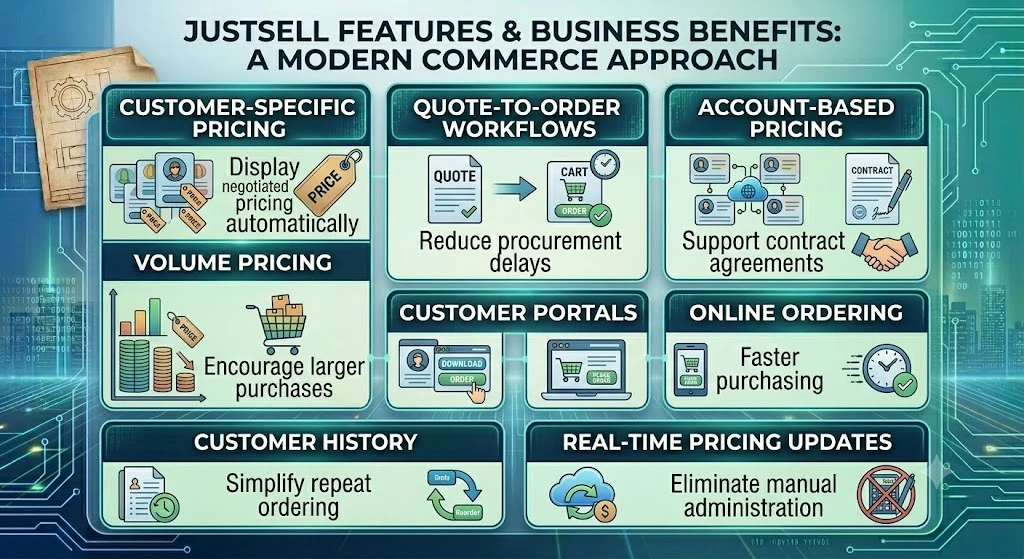
JustSell helps manufacturing and engineering distributors simplify quote management and automate customer-specific pricing.
Key Features
By reducing friction between quoting and ordering, JustSell helps distributors improve customer experience and accelerate sales.
FAQ
Many buyers operate under procurement policies that require quotations, negotiated pricing agreements, or supplier comparisons before purchasing.
Customer-specific pricing allows distributors to display agreed rates, discounts, and contract pricing for individual customer accounts.
Quote-to-order workflows allow approved quotations to be converted directly into orders, reducing delays and administrative effort.
Volume pricing rewards larger purchases and helps distributors remain competitive while increasing order values.
Distributors can automate pricing, simplify approval processes, and provide self-service quoting tools through wholesale ecommerce platforms.
Wholesale ecommerce platforms streamline pricing, quoting, ordering, and customer account management in one system.
Conclusion
Manufacturing buyers often know exactly what they need to purchase.
However, manual quoting processes, pricing approvals, and contract management can slow procurement and create unnecessary friction.
Distributors that rely on traditional pricing methods often face increased administration, slower sales cycles, and reduced customer satisfaction.
By implementing customer-specific pricing, quote-to-order workflows, and digital procurement tools, distributors can simplify purchasing and improve operational efficiency.
As procurement expectations continue to evolve, businesses that make pricing and ordering easier will gain a significant competitive advantage.
JustSell Wholesale Ecommerce helps manufacturing and engineering distributors achieve exactly that by providing automated pricing, quote-to-order workflows, customer-specific terms, and digital procurement tools in one platform.
See How JustSell Can Help Your Manufacturing Distribution Business
JustSell Wholesale Ecommerce provides:
- Customer-specific pricing
- Quote-to-order workflows
- Account pricing
- Volume pricing
- Customer portals
- Online ordering, our Customer Ordering App
- Customer history
- Real-time pricing updates
Book a demo today to see how JustSell can help streamline quoting, reduce procurement delays and improve customer experience.
Related Articles

How Manufacturing and Engineering Distributors Can Manage Complex Product Catalogues More Effectively
Engineering catalogues run to tens of thousands of SKUs, each with sizes, materials, ratings and certifications. This guide covers why basic ecommerce falls short, how technical product structures and filtering improve discovery, and where customer-specific catalogues help.

Managing Customer-Specific Pricing in Vape Wholesale: How to Reduce Admin and Increase Sales
When every customer has a different price list, pricing turns into admin. This guide covers the types of wholesale pricing, what manual processes cost, and how customer groups, tiers and promotions increase order values.
Compliance as a Competitive Edge: Building Retailer Trust in Vape Distribution
Retailers buying vape stock are buying confidence that it is legal to sell. This guide covers what they check before ordering, what poor product information costs, and how centralised, always-current data turns compliance into an advantage.