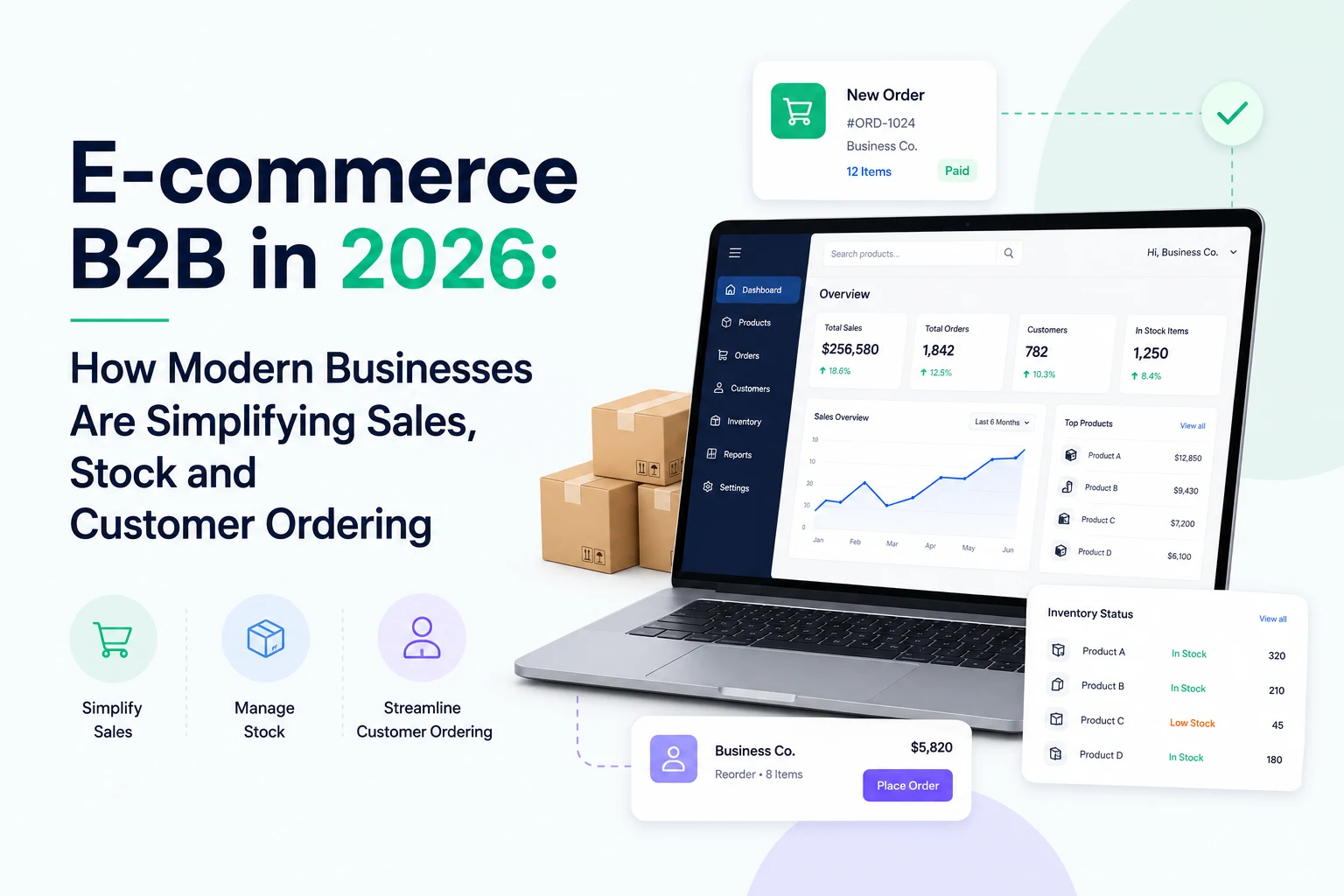
E-commerce B2B in 2026: How Modern Businesses Are Simplifying Sales, Stock and Customer Ordering
Synopsis
A guide to the components of a working B2B ecommerce setup: the website itself, inventory management, multi-channel selling, SEO, and automation — and how to judge which platform fits.
Table of Contents
- 1.Introduction
- 2.What Is E-commerce B2B?
- 3.Why E-commerce B2B Is Growing Rapidly
- 4.The Key Components of a Successful B2B Ecommerce Website
- 5.Why Ecommerce Inventory Management Matters
- 6.Multi-Channel Selling: Reaching Customers Everywhere
- 7.Ecommerce SEO: Getting Found Online
- 8.Ecommerce Automation: Doing More With Less
- 9.How to Choose the Best Ecommerce Platform
- 10.How JustSell Helps
- 11.Frequently Asked Questions
- 12.Conclusion
Introduction
Running a successful business today means managing far more than just products and customers. Whether you're a wholesaler, manufacturer, distributor, retailer or growing online brand, you're expected to sell through multiple channels, keep stock accurate, fulfil orders quickly and provide a smooth buying experience.
For many businesses, outdated systems, spreadsheets and disconnected software make this increasingly difficult.
This is where E-commerce B2B solutions have become essential.
Modern B2B ecommerce platforms allow businesses to automate ordering, improve customer service, manage inventory more effectively and increase sales without increasing administrative workload.
In this guide, we'll explore what E-commerce B2B means, why it matters, how to choose the best ecommerce platform for your business and the key features that help growing companies operate more efficiently.
What Is E-commerce B2B?
E-commerce B2B (Business-to-Business ecommerce) refers to online transactions between businesses rather than sales directly to consumers.
Instead of selling individual products to consumers, B2B businesses often sell:
- Wholesale products
- Manufacturing supplies
- Trade goods
- Components and materials
- Commercial equipment
- Bulk orders
Examples include:
- A distributor supplying products to retailers
- A manufacturer selling directly to trade customers
- A wholesaler accepting online orders from existing accounts
- A supplier serving multiple business locations
Unlike B2C ecommerce, B2B transactions often involve:
- Customer-specific pricing
- Trade accounts
- Volume discounts
- Credit terms
- Repeat purchasing
- Complex ordering processes
As a result, businesses need ecommerce software designed specifically for these requirements.
Why E-commerce B2B Is Growing Rapidly
The shift towards digital purchasing continues to accelerate.
Research consistently shows that modern buyers increasingly prefer self-service purchasing over traditional phone and email ordering.
Business customers now expect:
- Online ordering
- Real-time stock visibility
- Account-specific pricing
- Fast order tracking
- Mobile access
- Easy reordering
Companies that continue relying solely on manual ordering methods often struggle to compete against businesses that offer a smoother online experience.
The result is clear:
Businesses investing in B2B ordering platforms often benefit from:
- Faster order processing
- Reduced administration
- Fewer ordering errors
- Better customer satisfaction
- Increased repeat business
The Key Components of a Successful B2B Ecommerce Website
Not all ecommerce websites are built for B2B operations.
The best ecommerce platform for business customers should include functionality that supports trade purchasing.
Customer-Specific Pricing
Many wholesalers and distributors negotiate pricing with customers.
A good B2B ordering platform should allow:
- Trade pricing
- Customer groups
- Tiered discounts
- Volume pricing
This removes the need for manual quotations on every order.
Fast Reordering
Many B2B customers buy the same products repeatedly.
Features such as:
- Saved order history
- Quick reorder options
- Favourite product lists
can significantly improve customer experience.
Mobile Ordering
Business buyers increasingly place orders while travelling, visiting sites or working remotely.
A customer ordering app allows customers to:
- Browse products
- Check stock
- Place orders
- View account information
from anywhere.
Real-Time Inventory Visibility
Nothing frustrates customers more than ordering products that are unavailable.
Accurate stock visibility helps businesses:
- Reduce overselling
- Improve planning
- Increase trust
Why Ecommerce Inventory Management Matters
Inventory is one of the biggest challenges facing growing businesses.
Poor stock control can create:
- Lost sales
- Excess stockholding
- Cash flow problems
- Fulfilment delays
- Customer dissatisfaction
This is why ecommerce inventory management has become a critical part of modern business operations.
Signs Your Inventory Process Needs Improvement
You may need better inventory management software if:
- Staff rely on spreadsheets
- Stock counts regularly differ from actual inventory
- Overselling occurs
- Purchasing decisions are based on guesswork
- Multiple locations are difficult to manage
Benefits of Inventory Management Software
Effective inventory management software can help businesses:
- Track stock in real time
- Monitor stock across locations
- Improve forecasting
- Reduce waste
- Increase order accuracy
For businesses selling online, inventory accuracy directly impacts customer satisfaction and profitability.
Multi-Channel Selling: Reaching Customers Everywhere
Today's buyers discover products through multiple channels.
Many businesses now sell through:
- Ecommerce websites
- Marketplaces
- Physical stores
- Mobile apps
- Social commerce channels
Managing these separately often creates operational headaches.
Challenges of Multi-Channel Selling
Common issues include:
- Duplicate stock management
- Pricing inconsistencies
- Manual order processing
- Overselling products
Benefits of Centralised Management
Businesses that centralise operations can:
- Maintain accurate inventory
- Process orders faster
- Reduce administration
- Improve reporting
A connected ecommerce platform helps businesses manage products, pricing and orders from one system.
Ecommerce SEO: Getting Found Online
Even the best online store won't generate sales if nobody can find it.
This is where ecommerce SEO becomes important.
Search engine optimization helps businesses improve visibility in search results when potential customers are actively looking for products and suppliers.
Essential Ecommerce SEO Practices
Optimise Product Pages
Include:
- Clear product titles
- Unique descriptions
- Relevant keywords
- High-quality images
Improve Site Structure
A well-organised website helps both customers and search engines navigate your content.
Create Useful Content
Publishing articles that answer customer questions can attract qualified traffic.
Examples include:
- Buying guides
- Product comparisons
- Industry insights
- How-to articles
Focus on Technical Performance
Search engines favour websites that:
- Load quickly
- Work well on mobile devices
- Provide secure browsing
SEO is often one of the most cost-effective ecommerce marketing strategies available.
Ecommerce Automation: Doing More With Less
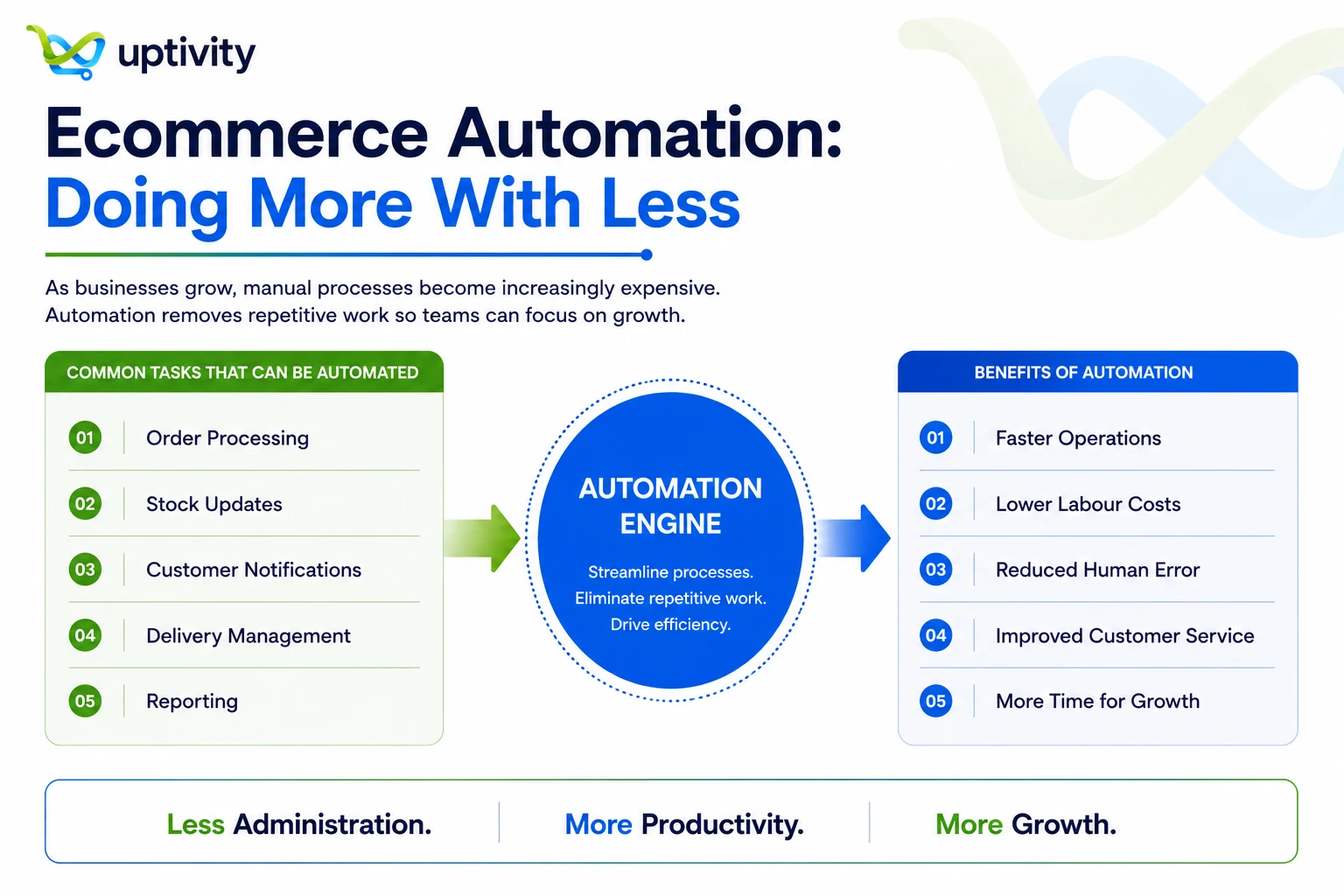
As businesses grow, manual processes become increasingly expensive.
Ecommerce automation helps reduce repetitive tasks such as:
- Order processing
- Stock updates
- Customer notifications
- Delivery management
- Reporting
Benefits of Automation
Businesses often experience:
- Faster operations
- Lower labour costs
- Reduced human error
- Improved customer service
Automation allows teams to focus on growth rather than administration.
How to Choose the Best Ecommerce Platform
Selecting the best ecommerce platform requires more than comparing website designs.
Business owners should evaluate how well a platform supports their entire operation.
Questions to Ask
Can It Support Future Growth?
Your platform should scale as your business expands.
Does It Handle B2B Requirements?
Look for support for:
- Trade accounts
- Wholesale ordering
- Customer pricing
- Repeat ordering
Does It Include Inventory Management?
Integrated stock control can eliminate the need for additional software.
Can It Support Multi-Channel Selling?
A single platform should ideally manage all sales channels.
What Are the Ongoing Costs?
Look beyond initial setup fees and understand:
- Monthly costs
- Transaction fees
- Integration costs
- Support costs
The cheapest option often becomes the most expensive if it creates operational inefficiencies.
How JustSell Helps
Many businesses reach a stage where disconnected systems start holding them back.
They may have:
- Separate ecommerce software
- Independent stock systems
- Manual ordering processes
- Multiple spreadsheets
- Limited visibility across operations
JustSell was developed to help businesses bring these processes together.
Instead of managing products, stock, orders and customers across multiple systems, businesses can manage them from one platform.
For wholesalers and distributors, this can mean providing customers with a professional B2B ordering platform that supports trade pricing, repeat ordering and self-service purchasing.
For retailers and multi-location businesses, it can help connect ecommerce, stock management and point-of-sale operations.
Businesses using JustSell can benefit from:
- Centralised online sales management
- Integrated ecommerce inventory management
- Wholesale ecommerce functionality
- Customer ordering apps
- Multi-channel selling capabilities
- Fixed monthly pricing without commission on sales
The goal isn't simply to sell online. It's to reduce administration, improve visibility and make day-to-day operations easier to manage.
For growing businesses, this can create a stronger foundation for long-term growth.
Frequently Asked Questions
E-commerce B2B refers to online transactions between businesses. It typically involves wholesale ordering, trade pricing, account management and larger order volumes than consumer ecommerce.
The best ecommerce platform should support your sales channels, inventory management, customer requirements and future growth. Businesses should also consider pricing, integrations and automation capabilities.
Inventory management software helps businesses maintain accurate stock levels, reduce overselling, improve purchasing decisions and provide better customer service.
To start an online store for wholesale customers, choose ecommerce software that supports trade accounts, customer-specific pricing, bulk ordering and online account management.
Yes. JustSell includes tools designed for B2B ordering, wholesale ecommerce, customer ordering apps and online sales management, helping businesses provide a more efficient ordering experience for trade customers.
Conclusion
The demand for effective E-commerce B2B solutions continues to grow as businesses seek more efficient ways to sell, manage inventory and serve customers.
Modern buyers expect online ordering, accurate stock information and a seamless purchasing experience.
Businesses that invest in the right ecommerce software can benefit from:
- Better customer service
- Improved inventory control
- Increased operational efficiency
- Stronger online visibility
- Greater scalability
Whether you're launching your first online store or upgrading an existing operation, choosing a platform that supports sales, stock management and customer ordering from one place can make a significant difference.
If you're looking for a simpler way to manage online sales, stock, customer ordering and business operations from one place, it's worth exploring what JustSell can offer.
Related Articles

How Manufacturing and Engineering Parts Distributors Can Increase Sales and Improve Customer Ordering with Wholesale Ecommerce
Manufacturing buyers judge a supplier on how easy it is to order, not only on price. This guide covers the cost of manual ordering, how self-service and customer-specific pricing increase sales, and why faster reordering drives repeat business.

How Vape Wholesalers Can Speed Up Retailer Reordering and Increase Repeat Sales
If a retailer has to rebuild the same order every week, some weeks they will not bother. This guide covers how repeat orders are really placed, what slow ordering costs, and how order history and branded ordering apps speed it up.
B2B Wholesale E-Commerce Software: What Trade Suppliers Really Need Before Selling Online
Wholesale ecommerce is not consumer ecommerce with trade prices bolted on. This guide sets out how the two differ, the problems B2B software has to solve, and follows a builders merchant through the move online.